The Pressure to Keep Up: Why the Two-Year Review Isn’t the Whole Story

By Laura Johnstone

Today Amelia had her two-year review with the Health Visitor.

And I won’t lie—it left me feeling frustrated. Not because of anything they did wrong in particular, but because of the weight that these appointments can carry. That feeling of being assessed. That feeling of am I doing enough? Is she doing enough? And worse… am I failing her?

This isn’t the first time I’ve felt this. I doubt it’ll be the last. Because the truth is—modern parenting feels like a constant race. A race to hit the milestones. A race to keep up appearances. A race to keep up with the neighbours, the social media feeds, the health visitor’s checklist. It’s exhausting. And the two-year review can bring all of that pressure bubbling to the surface.

Amelia is bright, cheeky, fiercely independent, and thriving in her own unique way. She’s overcome more in her two short years than many do in a lifetime. And yet, sitting in that room (or on that call), listening to questions like “Can she string two words together?” or “Is she able to jump with two feet?”, I couldn’t help but feel a knot of panic. The pressure to say the right things, to prove that yes, we’re doing OK—whatever “OK” even means.

But here’s what I’ve learned:

Children aren’t checklists.

Parents aren’t machines.

And development isn’t linear.

Especially for children like Amelia—born premature, with a tough start. Especially for parents like us—juggling trauma, healing, work, and family life, often without enough support. We are constantly navigating more than what’s visible on the surface.

And still, society keeps pushing this idea that if your child isn’t doing XYZ by this exact date, something’s wrong. And if something’s wrong, it must be your fault.

Let me tell you this now: it isn’t.

You’re not falling behind.

Your child isn’t broken.

You haven’t failed.

There’s nothing wrong with having questions, or needing extra help. There’s nothing wrong with doing things in your own way and time. That is what parenting is—it’s learning on the job, every single day, with no lunch break and no line manager to say “you’re doing a good job.”

So to any parent reading this who’s dreading their two-year review, or whose child hasn’t yet hit the milestones in that neat little red book—take a deep breath. Those questions aren’t the full story. They never will be.

Your child is more than a list of developmental markers.

And you are more than a tired face in a waiting room.

You are their safe place.

You are doing your best.

And that is enough.

If this blog resonates with you, please like, share, and subscribe to The Good, The Bad, and Your Parenting Journey. Let’s continue to lift the lid on the realities of parenting and support one another without judgement.

References:

NHS Start for Life: https://www.nhs.uk/start4life UNICEF Parenting Resources: https://www.unicef.org/parenting Zero to Three: What Are Developmental Milestones? https://www.zerotothree.org
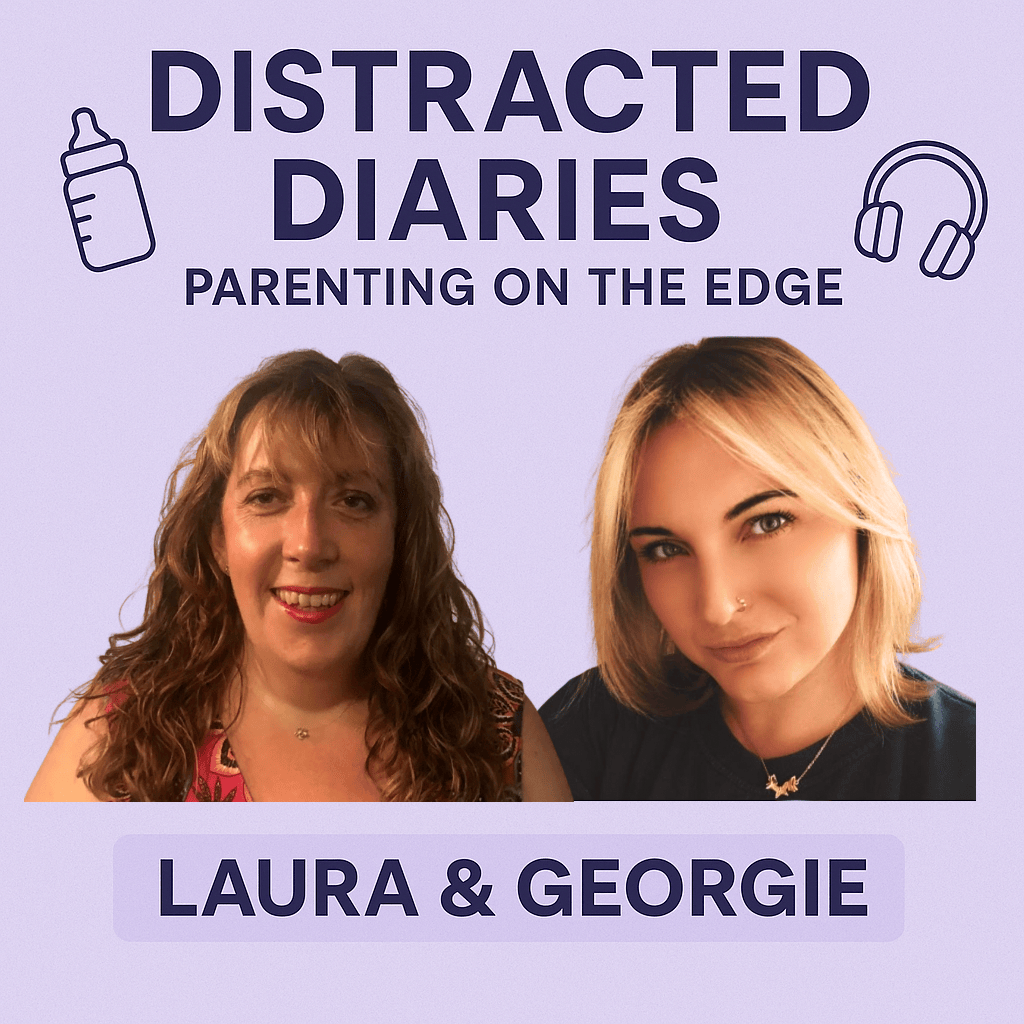
🎙️ Introducing Our New Podcast: Distracted Diaries – Parenting on the Edge

By Laura Johnstone & Georgie Hammer

Two mums. One mic. A thousand distractions.

Distracted diaries, parenting on the edge

If you’ve ever tried to finish a sentence with a toddler hanging off your leg, a dinner burning in the oven, and a head full of mental tabs left open – you’re not alone. That’s the heart of our brand-new podcast: Distracted Diaries: Parenting on the Edge.

We’re Laura Johnstone and Georgie Hammer – two neurodivergent mums who are wading (and sometimes barely treading water) through the beautiful chaos of parenthood. We both have ADHD, a healthy sense of humour, and a whole lot of real-life stories. So, we decided to hit record.

🧠 Why We Started This Podcast

Parenting is hard. Parenting while neurodivergent? That’s a whole different story. From forgetting the PE kit again to having eight tabs open in our brain at any one time, we’ve lived it – and we want to talk about it.

So often, parents – especially neurodivergent ones – are made to feel like they’re failing. That they’re not calm enough, organised enough, together enough.

But here’s what we believe: you are enough. And you’re not alone.

We created Distracted Diaries because we were tired of the polished version of parenting that gets shared online. We wanted to make space for the honest conversations – the ones that happen in WhatsApp chats, in the car park after school drop-off, or when you finally get five minutes to breathe.

🎧 What You Can Expect

Each episode is a mix of:

Parenting real talk (with all the unfiltered bits) Honest conversations about ADHD, autism, and neurodiversity Funny stories and lessons learned the hard way Special guests, relatable rants, and the occasional tangent when one of us forgets what we were saying

It’s messy, it’s heartfelt, and it’s a little chaotic – but so is life, and we’re okay with that.

🍼 Everyone’s Welcome in the Distracted Diaries

Whether you’re a neurodivergent parent, raising a neurodivergent child, or just someone trying to do your best on no sleep and cold coffee – this podcast is for you.

We believe in compassion over perfection. And we believe that the best kind of parenting isn’t about getting it right all the time – it’s about showing up and trying again.

📣 Listen, Laugh, and (Hopefully) Relate

The first episodes of Distracted Diaries: Parenting on the Edge will be live very soon on all major podcast platforms – including Spotify and Apple Podcasts.

So hit subscribe, follow along, and join us on this journey. Because if we can laugh through the meltdowns, maybe we’ll cry a little less.

🎧 Hosted by Laura Johnstone & Georgie Hammer

Follow us on social media and be part of the Distracted Diaries community.

🙋‍♀️ Want to get involved or share your story? Drop us a message – we’d love to chat!

👉 If you enjoyed this blog, please like, share, and subscribe to keep up with new episodes and updates.

Two Years Ago Today: The Start of Something Bigger Than Us

Two years ago today, I was waiting to go into surgery. I remember the weight of that moment — not just the fear, not just the unknown, but the reality that this was it. I was about to give birth, not in the gentle, serene way you often see in films, but through major abdominal surgery. A caesarean section. People often don’t talk about the reality of what that really means.

They don’t tell you that they go through seven layers of tissue. That it’s classed as major surgery. And unlike every other major surgery, where you’re told to rest, to not lift, to let your body heal for six weeks — this one is different. Hours later, you’re expected to be holding a tiny human, feeding them, changing them, learning how to keep them alive while barely able to keep your eyes open or move without pain.

And yet, here we are.

Two years later.

Ryan and I have kept our daughter alive for two whole years. I don’t say that flippantly — it is something we are incredibly proud of. With the start that Amelia had — the alarms, the wires, the neonatal unit, the quiet voices of concern, the exhaustion — I am not just proud of her. I am proud of us. Of the way we’ve learned, grown, crumbled and built ourselves back up again.

Amelia is thriving. She is cheeky. She is happy. She is here. And that is all that matters.

Everyone who’s been pregnant, everyone who’s had a baby, has their story. The pregnancy story. The birth story. And yet, what still baffles me is the way Hollywood tells it. You know the scenes — a tiny bump, glowing skin, a few contractions, maybe a scream or two, and a perfect baby placed in mum’s arms as everyone sighs with joy.

That might be someone’s experience. But for many of us? It’s not.

There are birth plans that never see the light of day. There are preterm labours. Babies in distress. Pre-eclampsia. Emergency sections. Baby losses. Trauma that doesn’t vanish just because there’s a healthy baby in your arms.

That’s why we must stop judging other parents — mums and dads. Every single one of us is carrying more than we say out loud. Every parent has had moments of doubt, moments of fear, moments where they felt like they were doing it all wrong. So let’s hold each other up instead of tearing each other down. Let’s be the village — or even better, the town — that helps raise each other’s kids and shoulders each other’s burdens.

Today we celebrate Amelia. But today is also for me and Ryan. It’s our two-year parent anniversary. We didn’t just survive. We’re raising a child who is filled with laughter and life. And even if the road has been anything but smooth, it’s ours — and I wouldn’t trade it for anything.

So, happy birthday, Amelia.

And happy parentiversary to us.

We did it.

If this blog resonated with you, please like, share and subscribe. Your support helps us reach more families going through similar journeys.

References and Further Reading:

NHS. (2023). Recovering from a caesarean section Birth Trauma Association UK. (2024). Understanding Birth Trauma Tommy’s. (2023). Emergency c-sections and premature birth

Two Years Ago Today: A Reflection on Fear, Change and Hope

Two years ago today, I was picked up at 8:30 in the morning by my mum and dad. We were heading to Southampton for my hospital admission, and we fully expected the usual hassle. The roads to Southampton are often a nightmare—busy, slow-moving, and unpredictable. But somehow, that day, we made it in just over an hour and a quarter. It was one of those rare moments where the traffic gods were kind to us.

We even had time for a cuppa before heading into the hospital. It was during that quiet moment, sitting with my mum and dad, trying to steady my nerves, that I suddenly realised—I’d forgotten my crutches. I’d been managing short distances without them at that point, trying to stay mobile and positive. But I knew I was going to need them after Amelia was born. That realisation hit me like a brick. Thankfully, the physio department at the hospital were amazing. They sorted me out with a new pair of crutches without any fuss, and I’ll always be grateful for their kindness and speed.

At midday, I was due to be admitted. The plan was for me to be first in line for a C-section the next morning, but as these things often go, I ended up being second. It didn’t matter much—I was already feeling the weight of the day.

The admission process took a while. Taking blood was a challenge—they had to try five times before they were successful. Then came the medical history. Mine is never short, and even the staff commented on how long it took. I was in that room for well over an hour and a half. All the while, my anxiety was growing.

What made it harder was that Ryan couldn’t be with me straight away. He couldn’t get the day off work, as neonatal leave didn’t exist then like it does now. So after finishing work, he got the train to Southampton and stayed overnight with friends. We hadn’t yet moved into Ronald McDonald House. Everything felt a bit makeshift, a bit uncertain—but we made it work.

I remember sitting in that hospital room, fear sitting heavy on my chest. I didn’t know what was going to happen. I didn’t know if Amelia would be okay. I didn’t even know if I’d be okay. That level of fear is something I wouldn’t wish on anyone.

And yet… here we are. Two years on. And Amelia? She’s thriving.

She is wild and wonderful, adventurous and hilarious, cheeky and full of life. She climbs, runs, laughs with her whole body, and keeps us on our toes in the best way. Every time she wraps her arms around me or says something new, I’m reminded of how far we’ve come.

Two years ago, I was terrified. Today, I’m full of gratitude.

If you’re about to walk into something similar—if you’re sitting in that hospital room right now, unsure of what tomorrow will look like—I see you. I’ve been there. And I want you to know it’s okay to be scared. You’re doing something extraordinary. And you’re not alone.

Let’s keep talking about these journeys.

If any of this resonates with you, I’d love to hear your story. Leave a comment, share your experience, and don’t forget to like and subscribe to the blog. Your voice might help someone else feel a little less alone.

References:

NHS Neonatal Leave Policy (2023 Update) Bliss Charity – Supporting parents of babies born premature or sick: https://www.bliss.org.uk

Pre-eclampsia in Black Women: The Warning Signs We Can’t Afford to Miss

When it comes to maternal health, there’s one truth we can’t ignore: Black women in the UK are four times more likely to die in childbirth or the postnatal period than white women. Among the causes, pre-eclampsia is one of the most silent but serious conditions — and tragically, it often gets missed.

Even today, the medical world continues to reflect a shocking lack of representation. The books we read in pregnancy, the posters on antenatal clinic walls, and the images used to teach students – until recently, they almost exclusively featured white babies. And it’s not just pregnancy books. During my training as a Podiatrist, I was struck by how little literature there was on skin conditions in darker skin tones. Skin diseases were shown and described primarily on white skin. That’s not just an oversight – it’s racial bias in plain sight.

And it has consequences. Because if you can’t see it, you can’t recognise it.

What is Pre-eclampsia?

Pre-eclampsia is a pregnancy complication usually characterised by high blood pressure and signs of damage to another organ system – often the kidneys or liver. It typically starts after 20 weeks of pregnancy in women whose blood pressure had previously been normal.

If left untreated, it can lead to serious – even life-threatening – complications for both mum and baby.

Common Signs and Symptoms of Pre-eclampsia

Some people have no symptoms at all, but here are the most common red flags:

Sudden swelling in the face, hands or feet Persistent headaches Changes in vision, like flashing lights or blurred vision Pain under the ribs, especially on the right side Sudden weight gain High blood pressure Protein in urine (usually picked up at routine checks)

Yet too often, these signs are dismissed — especially when they’re coming from Black women.

Why Does It Get Missed in Black Women?

1. Systemic Racial Bias

There’s a longstanding and well-documented issue of Black women not being believed when they say something’s wrong. Many report feeling dismissed, judged, or overlooked — even when presenting with symptoms of serious conditions.

2. Lack of Medical Representation

Most of our medical textbooks have been written with white patients in mind. Until recently, there were few (if any) images of Black babies in pregnancy books, and very little teaching on how conditions present in darker skin. I saw this first-hand in my own medical training. When I studied Podiatry, the images and resources almost never reflected diverse skin tones. This sends a clear message: you’re not the default.

3. Missed Visual Cues

Conditions like pre-eclampsia can cause physical changes — swelling, skin discolouration, or rashes — that look different depending on your skin tone. If professionals haven’t been trained to recognise those changes on darker skin, they can miss a diagnosis entirely.

The Risk is Real – and So Are the Losses

Pre-eclampsia is not just “a bit of high blood pressure”. It can lead to seizures (eclampsia), stroke, kidney or liver failure, or death — for mum or baby, or both. It’s a medical emergency, and it needs to be treated like one.

We can’t afford to keep missing it in Black women.

What Needs to Change?

More Representation: Medical books, posters, and resources must show symptoms across all skin tones and all babies. Better Training: Healthcare professionals need proper training in recognising conditions in non-white patients. Listening and Respecting: Every parent deserves to be heard. If a woman says something feels wrong, we must believe her. Challenging the Bias: From pregnancy appointments to emergency care, we must actively work to dismantle the racial bias that puts lives at risk.

Final Thoughts

If you’re a Black woman reading this — or supporting one — know this: you deserve to be seen, heard, and respected. Don’t hesitate to speak up if something doesn’t feel right. If you’re not satisfied with the care you’re receiving, ask for a second opinion. It could save your life.

This conversation isn’t just about symptoms. It’s about structural change. And it starts by raising awareness — one story, one voice, one blog post at a time.

💜 Let’s stop normalising inequality. Share this with someone who needs to see it.

Like and subscribe to the blog for more honest conversations on parenting, health, and navigating the world when you’re often overlooked.

References:

Knight, M., Bunch, K., Tuffnell, D., Jayakody, H., Shakespeare, J., Kotnis, R., Kenyon, S., & Kurinczuk, J. J. (2020). MBRRACE-UK: Saving Lives, Improving Mothers’ Care. University of Oxford. Five X More Campaign, 2022. Black Maternity Experiences Survey. NICE Guidelines [NG133] Hypertension in Pregnancy. Taylor, J.K. (2020). Structural Racism and Maternal Health Among Black Women. Journal of Law, Medicine & Ethics. Lens, J.W. (2020). Miscarriage, Stillbirth, and Reproductive Justice. Wash. UL Rev.

The First and the Last: Navigating Milestones After Birth Trauma

Yesterday, I booked Amelia into crèche for the first time as a toddler. It was such a big milestone — one of those “firsts” you imagine when you’re holding your tiny baby in the NICU and dreaming of normality. But what caught me off guard was how bittersweet it felt. You see, for us, this first is also a last.

People often ask me, “So, when are you having the next one?” And I always say, “Never again.” Without fail, I get the same response: “Oh, you say that now…” But I don’t say it lightly. I say it because I know. I say it with the weight of birth trauma behind me.

Therapy has been life-changing — I won’t deny that. It’s helped me understand and process so much of what we went through. But trauma doesn’t vanish. It doesn’t disappear with enough talking or mindfulness or checklists. Therapy gives you tools, but it doesn’t erase the pain. And booking Amelia into crèche yesterday brought all of that back.

Every first she reaches is a precious gift. But it’s also a reminder that I won’t do this again. There won’t be another baby to dress in first-day clothes, or to drop off for their first playgroup session. It’s a strange mixture of joy and grief, pride and pain. Because when trauma is tied to your journey into motherhood, it follows you into every milestone — even the happy ones.

I feel unbelievably lucky. Lucky that Amelia was born when she was, because five years earlier, I truly don’t believe she would have survived. The advances in neonatal medicine over the past decade are nothing short of miraculous. And I will forever be grateful for the teams at St George’s Hospital, Princess Anne Hospital, and Worthing Hospital. They gave her life. They gave me the chance to experience these milestones at all.

So while yesterday might look like a simple step for a toddler, it was a giant leap for this mum. It was a reminder of everything we’ve survived. And it was a quiet celebration — of the fact that she can go to crèche, that she is healthy enough, curious enough, confident enough.

And that, for me, is everything.

If you’ve experienced birth trauma or struggled with your own parenting journey, know you are not alone. Your feelings are valid. Please feel free to share this post, like and subscribe to stay connected. We are building a community that truly gets it.

References & Resources

Birth Trauma Association: www.birthtraumaassociation.org.uk St George’s University Hospitals NHS Foundation Trust Princess Anne Hospital – University Hospital Southampton Worthing Hospital – University Hospitals Sussex NHS Foundation Trust

From Dial-Up Days to Digital Dilemmas: Parenting in the Age of the Internet

I remember the screech of the dial-up modem vividly—those painfully slow connections that meant you couldn’t use the phone and the internet at the same time. Back then, having the internet at home felt like a luxury, not a lifeline. And I often find myself wondering what parenting must have been like during those early days of the web, or even before it entirely.

There was less help online back then—forums were few and far between, and websites with reliable information on parenting or child development were scarce. But strangely, I think there might have been less pressure, too. No curated Instagram feeds, no parenting influencers telling you how to get your baby to sleep through the night, and definitely no “mum wars” raging in the comments sections.

Fast forward to today, and it’s a different world. Support is more accessible than ever. With a few clicks, we can join parenting groups, watch how-to videos, and read personal stories that make us feel less alone. For neurodiverse families especially, the internet can be a lifeline—connecting us to resources, professionals, and each other. It’s a powerful thing when used right.

But there’s another side to it. Comparison is everywhere. We’re constantly exposed to the highlight reels of other families’ lives. It can make us feel like we’re not doing enough or not getting it right. The pressure to be perfect—to parent “by the book”—can be overwhelming. And while connection is easier than ever, so is isolation. It’s strange how we can feel so alone when we’re more connected than any previous generation.

The truth is, parenting in the digital age brings a mix of both progress and pressure. We have access to more information than ever, but also more judgement. We’re raising children in a world that moves fast, where the internet never sleeps and advice is everywhere—even when it’s not asked for.

That’s why it’s important to take a step back sometimes and remember that not all advice fits every family. That your journey is your own. That whether you’re neurodiverse, raising a neurodiverse child, or both—you are allowed to find your own rhythm without comparison clouding your view.

We might not be able to go back to the slower days of dial-up, but we can slow down how we consume digital content and be mindful of the effect it has on our parenting and mental health.

Let’s give ourselves permission to be present—not perfect.

Call to Action:

If you found this post helpful or it made you reflect on your own journey, please like, share, or subscribe to keep these honest conversations going. Your story matters.

References:

Livingstone, S., & Blum-Ross, A. (2020). Parenting for a Digital Future: How Hopes and Fears about Technology Shape Children’s Lives. Oxford University Press. Royal College of Psychiatrists. (2021). Mental Health and the Internet Anna Freud Centre (2023). Being Online: Understanding the Impact on Young People and Families

Do you remember life before the internet?

The Quiet Strength of a People Pleaser with a Voice for Justice

Over the years, people have often told me, “You have a way of putting people at ease,” and I suppose they’re right. I’m someone who can walk into a room and read the atmosphere like a book — I pick up on tone shifts, facial expressions, body language, and unspoken discomfort. But this isn’t something I learned from a textbook or a course. It’s something I developed as a child — a survival skill that grew out of always trying to make others comfortable, to smooth things over, and to not be a burden.

You see, I was a people pleaser — and truthfully, I still have those tendencies. When you’ve experienced trauma, grief, or grown up feeling like you had to work harder to be accepted, you become incredibly attuned to others. You learn to anticipate what they need before they ask, and you sometimes sacrifice your own peace to keep others comfortable.

But that sensitivity has become a strength. Because now, I use it to advocate for those who feel unseen. I don’t just notice when something’s wrong — I take action.

I remember one moment so clearly from my time working on the cruise ships. A client was booked in with me, and I was honestly dreading it. So many of the crew had said she was standoffish and even a little rude. But when she came in for her consultation and I started asking gentle questions — about her stress levels, how she was sleeping — she suddenly broke down in tears.

She told me that her dad had died just eight days earlier, and that before he passed, he had told her not to cancel the cruise. So there she was, completely heartbroken, trying to honour his wishes, but feeling isolated and misunderstood.

I was the manager, and luckily I had no one booked in after her. I stepped outside to reception, blocked off the next hour, and then came back and said, “Right. We’re not starting anything until you’ve had a hug and a cry, because I think you need that more than a treatment right now.”

She told me no one had asked if she was okay. In fact, she’d felt judged — not just by other guests but by the very crew who were supposed to make her feel welcome. So I went to speak to them. I gently but firmly said, “Please make sure she’s okay. Her dad has just died. She doesn’t need judgement — she needs kindness.”

That moment stayed with me. Not because I did something extraordinary, but because it reminded me how powerful empathy can be when paired with action.

So yes, I put people at ease — but not by accident. I do it because I see people. And I act. That’s not weakness. That’s strength.

I want to say this especially to anyone who’s ever been called “too sensitive” or has felt like their empathy made them a doormat. Your emotional intelligence is a gift. And when you pair that with courage and boundaries, you can not only comfort people — you can change how they experience the world.

I’m no longer afraid to stand up for what’s right, and I’ll always fight for those who feel unseen. Being a people pleaser taught me how to tune in — and now, I use that skill to lead with love, and to speak up with purpose.

Call to Action:

If this story resonated with you, please like, comment, and subscribe to stay connected. Let’s continue building a community where kindness is strength and empathy is action.

References:

Brown, B. (2018). Dare to Lead. Neff, K. (2011). Self-Compassion: The Proven Power of Being Kind to Yourself. NHS. (2023). Empathy and Mental Health Mind UK. (2024). Understanding Emotions and Advocacy

What are you good at?

What Does “Having It All” Really Mean?

By Laura Johnstone

When you hear the phrase “having it all,” what comes to mind? For many, it conjures up images of luxurious holidays, designer handbags, perfectly curated homes, and enormous bank balances. But for me, having it all is much simpler. It’s about love, connection, safety, and joy — the kind that money can’t buy.

For me, having it all is walking through the front door of a home filled with laughter. It’s having a cuddle on the sofa, knowing there’s food on the table, and seeing your child dance around the living room in their pyjamas. It’s about being able to breathe easy, knowing that, even in chaos, you are surrounded by love and comfort.

The Happiest People Aren’t the Richest

The happiest people I know are not the wealthiest — they’re the ones who appreciate what they have, instead of measuring their worth by their bank balance. They’re the ones who see joy in the ordinary. And that’s a lesson I hold close to my heart.

If you look back in history, even the wealthiest people couldn’t buy true peace. Take John Jacob Astor IV, one of the richest men aboard the Titanic. When disaster struck, he helped his pregnant wife into a lifeboat — and despite being offered a seat himself, he declined. He went down with the ship. That moment reminds us that money wasn’t everything, even to someone who had it all. At the end of the day, it’s love, values, and courage that define a person — not their possessions.

A New Definition of Success

So many people chase the idea of having “more.” More money, more stuff, more status. But for me, having enough is far more powerful. It means having the people I love close. It means comfort and peace, not pressure and comparison.

Especially as a neurodivergent parent raising a child who is neurodiverse, I’ve learned that success is about resilience, joy in the small things, and connection. Some days, success looks like making it to bedtime. Other days, it looks like a breakthrough moment or a giggle in the middle of a meltdown. These are my diamonds.

Knowing What’s Special Is Having It All

We live in a world that’s constantly pushing us to strive for more. But sometimes, the real gift is pausing and saying: This is enough. This is everything. Because when we know what’s truly special — whether it’s a hug, a hot drink, a shared laugh — we do have it all.

If this blog spoke to you, please like, share, and subscribe to keep following the journey. Let’s keep redefining what matters, together.

References:

Harvard Health Publishing: [The Psychology of Happiness] Office for National Statistics (UK): [What matters most in life: life satisfaction insights] Encyclopaedia Britannica: [John Jacob Astor IV and the Titanic] Mental Health Foundation UK: [Contentment and wellbeing]

What does “having it all” mean to you? Is it attainable?

Who I’d Like to Speak to Very Soon: A Visit of Love, Loss and Legacy

There are moments in life where the past and present gently meet—when we pause long enough to let memory, emotion and hope intertwine. One of those moments is coming up for me this July, when we head to North Wales for my dad’s 80th birthday. A milestone birthday for a man who has given us so much, and a time where family, celebration, and reflection come together.

This trip is more than just a holiday. It’s a pilgrimage in many ways.

We’ll be visiting places where my dad grew up—Bangor, Caernarfon, and other spots rich in family history. But there is one place I am most looking forward to: the grave of my twin brother, Nicholas, and my Nain (Welsh for grandmother). This visit carries a deep personal significance. It will be the first time some of my family—my sister and my older nieces—have been to Nicholas’s resting place. And for me, it will be the first time I take Amelia there.

It might sound strange to some, but I desperately want to introduce Amelia to them. I want her to meet them in the only way she can—through love, through memory, and through presence of heart. Even though Nicholas and Nain are no longer here in body, I feel they are very much part of our journey. I know they’re watching over us, and I know they already love Amelia. But this visit is my chance to show Amelia where part of her story begins.

My twin brother has always been a part of me. Born too soon, he didn’t make it—but I did. And that has shaped so much of my life. It’s a strange kind of survivor’s grief that lives in the quiet corners of your soul. It’s a longing for a connection you can feel but not fully touch. Taking Amelia to his grave feels like something I need to do—not just for me, but for him and for her.

And Nain. Oh, how I wish she had met Amelia. I know she would’ve loved her deeply, just as she did all of us. Nain was the matriarch, the quiet strength in the background of our family. She is the reason I carry on with compassion and kindness at the heart of everything I do. She would have been so proud. I can picture her now, holding Amelia’s little hand, whispering something in Welsh that makes them both smile.

I suppose, if I could speak to anyone very soon, it would be to Nicholas and Nain. I would tell them about Amelia’s cheeky grin, her wild energy, and her beautiful spirit. I would tell them about the love and chaos of our little family. And I’d tell them how much I miss them. How I carry them in my heart every single day.

This trip is going to be emotional, there’s no doubt about that. But it’s also going to be healing. It’s about closing a circle. About letting those we’ve lost meet those we’ve gained. And I know that when Amelia runs around the graves, laughing or exploring or asking questions, something sacred will happen.

Love always finds a way.

Call to Action:

Have you ever introduced your child to a loved one who’s passed? I’d love to hear how you honoured that connection. Let’s support each other in keeping memories alive. Please like, share, and subscribe to The Good, The Bad, and Your Parenting Journey so we can grow this community of compassion and strength together.

References:

Sands UK – Supporting families through baby loss: https://www.sands.org.uk Cruse Bereavement Support: https://www.cruse.org.uk Tommy’s: https://www.tommys.org

Who would you like to talk to soon?

Design a site like this with WordPress.com
Get started