I Wrote the NICU Guide I Wish I’d Had When Amelia Was Born

A comprehensive guide for NICU parents, written by a NICU mum who couldn’t find one that was actually complete

When my daughter Amelia was born at 32 weeks and 6 days, I sat next to her incubator completely overwhelmed, trying to make sense of a world I never expected to be in. I wanted something that explained the language the doctors were using, helped me track what was happening day to day, and reminded me on the hardest days that I was still her mum.

I could not find it. So I wrote it myself.

The NICU Parent’s Survival Guide is now available as an ebook, with a paperback version coming soon once the cover is finished. It is the resource I needed during those weeks under three different hospitals, surrounded by some of the country’s top neonatal consultants, and still feeling like nobody had handed me the full picture. This was built from the inside, by someone who has actually sat in that chair.

What You Will Find Inside

This guide is comprehensive because the situation it covers deserves nothing less. Here is what’s included.

A NICU Glossary You Can Actually Understand

Neonatal intensive care comes with its own language, and nobody should have to nod along pretending they followed what a consultant just said. This section translates the terms you will hear every day into plain English, so you can ask better questions and actually understand the answers.

A Full Daily Planner

A place to track your baby’s medical updates, the questions you want to ask the team, your involvement in their care, the practical things still waiting for you outside the hospital, and a small daily check-in with yourself, because that matters too.

A Guided Feelings Section

Ten writing prompts for the moments when a blank page feels impossible. Whether you are numb, frightened, carrying guilt you cannot explain, or simply too tired to know what you are feeling, these prompts meet you exactly where you are.

100 Affirmations Across Ten Categories

From letting go of guilt to holding onto hope. Some days you need someone to hand you the words, because you cannot find your own.

Milk Expression Logs and Pumping Guidance

Five pages of expression logs with feeding tips, plus the guidance on how your pumping needs to change once your milk comes in, information that most parents told me they were never actually given.

A Full Year of Planning

Ten daily planner pages and pumping schedules covering birth through to twelve months, so you have somewhere to track the whole journey, not just the hospital stay.

A UK Charity and Support Directory

A list of organisations that exist specifically for families like yours, because you should not have to go looking for support while you are also trying to hold everything else together.

Why I Made This

Every resource I found while Amelia was in NICU was either incomplete, scattered across ten different websites, or written by someone who had never actually lived through it. None of that is a criticism of the people who made them. It is just the reason I felt the gap so clearly, and the reason I decided to fill it properly rather than settle for almost.

You are your baby’s parent. Not a visitor. Not a bystander. And you are not alone.


Get the Guide

The NICU Parent’s Survival Guide is available now on Amazon as an ebook, with paperback on the way. If you are currently sitting next to an incubator, or you know someone who is, you can get your copy here.

If this guide reaches even one parent in the chair I used to sit in, it has done its job. If you have read it, I would love it if you left a review. It helps other NICU families find it when they need it most, and it helps me keep writing the resources this community deserves.

If you found this useful, please like and subscribe for more honest, practical content on parenting, neurodivergence, and the realities nobody warns you about.


References

Johnstone, L. (2026) NICU Parent’s Survival Guide. Amazon Kindle Direct Publishing.

Personal experience and reflections drawn from the author’s own NICU journey with her daughter, Amelia.
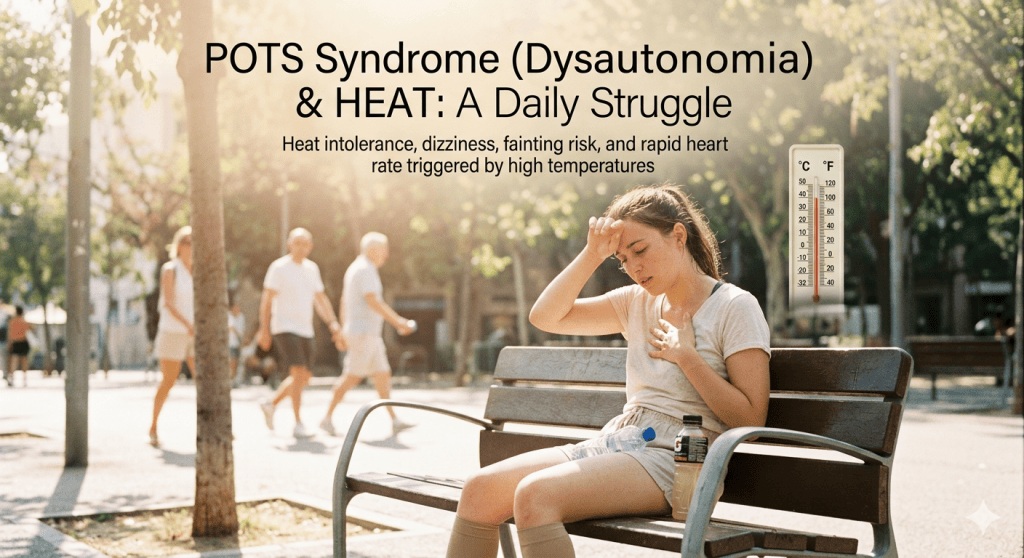
POTS Syndrome, Dysautonomia, and Heat: Why a Simple Fan Might Be the Most Powerful Thing in Your House

Published on The Good, the Bad and Your Parenting Journey

It is May Bank Holiday Monday and it is 11pm. Ryan is lying next to me absolutely convinced that the fan we bought last year is somewhere in the loft. I told him it was in the cleaning cupboard. Reader, it was in the cleaning cupboard.
We bought it originally for our daughter’s room, but her room stays cooler than ours so it has been sitting in there waiting for exactly this moment. It is now pointed directly at us and honestly, sleep might actually happen tonight.
Which would be lovely. Because our nearly-three-year-old is not what you would call a fan of sleep herself. We will be up around seven regardless of what time we actually drop off tonight. If you are reading this at a similarly ridiculous hour with similarly tired eyes, hello. You are not alone.
This is the blog that came out of that very glamorous Bank Holiday Monday experience. Because if you have POTS or dysautonomia, or you just run warm, or you are a parent lying awake in a stuffy room while your husband insists the fan is in the loft when it is absolutely not, this one is for you.

First Things First: What Is Dysautonomia?
Before we get to POTS specifically, it helps to understand the bigger picture. Dysautonomia is an umbrella term for conditions where the autonomic nervous system does not work the way it should.
The autonomic nervous system is the part of the nervous system that handles all the automatic things your body does throughout the day without you thinking about them. It is like a thermostat that regulates various bodily functions in response to changes in the body and the environment, including blood pressure when you stand up, heart rate when you run, sweating when you step outside in the heat, and movement of food through the bowels after eating.
In people with dysautonomia, that constant seamless dialogue between body systems breaks down. The responses are too big, too small, too slow, or simply wrong for the situation.
Dysautonomia is not one single condition. It is a family of conditions, and POTS is one of the most commonly encountered forms of it.

So What Is POTS?
POTS, or Postural Orthostatic Tachycardia Syndrome, is a condition where your heart rate increases by 30 or more beats per minute within 10 minutes of standing up. It is a form of dysautonomia that controls automatic body functions like heart rate and blood pressure.
In other words, your body’s automatic systems cannot keep up with the simple act of you standing up. Most people stand up and their body quietly adjusts without them ever noticing. With POTS, instead of adjusting smoothly, the heart rate shoots up, blood pressure drops, and you are left dealing with a wave of symptoms that can genuinely floor you.
Common symptoms include dizziness, palpitations, and exercise intolerance, typically brought on by the upright position and relieved when lying down. Other symptoms can include shortness of breath, chest pain, chronic fatigue, generalised weakness, heat intolerance, headaches, brain fog, muscle and joint pain, nausea, and abnormal sweating.
It is classed as an invisible illness. From the outside you might look absolutely fine. On the inside, you feel like you have just sprinted for a bus, and all you did was walk to the kitchen.

Why Heat Makes Everything So Much Worse
Here is the bit that a lot of people do not realise, even those who have been living with POTS for years. Heat is not just uncomfortable. It is a genuine physiological trigger.
Heat causes blood vessels to dilate and redirects blood to the skin for cooling. In conditions like POTS, this makes blood pooling worse and reduces blood pressure, which worsens symptoms.
Sweating too much, sweating too little, and temperature intolerance are all considered key manifestations of dysautonomia. Heat causes vasodilation, which in turn makes orthostatic intolerance and POTS symptoms worse.
Based on community polls, heat is one of the most common triggers for flare-ups and worsening symptoms. This is because of the thermoregulation difficulties some people with dysautonomia experience, in addition to the blood vessel widening that happens in warm environments, contributing to blood pooling and orthostatic intolerance.
So it is not that you are being dramatic when a warm afternoon floors you. Your body is genuinely struggling to manage something that most people’s systems handle automatically and invisibly. That is a really important thing to understand, both for yourself and for anyone around you who does not quite get it yet.
This matters enormously when you are a parent, because parenting does not pause for a symptom flare. The school run does not care that it is warm. Dinner still needs making. Life keeps moving regardless.

Enter: The Humble Fan
Okay, I know. A fan is not glamorous. It is not a cutting-edge medical device. It was, in our case, sitting forgotten in the cleaning cupboard while my husband was convinced it had somehow migrated to the loft.
But here is the thing. It works.
Maintaining a consistent temperature is important for people with POTS, as extremes, especially heat, can make symptoms worse. Air conditioning, cooling vests, handheld misters, and personal fans can all help.
A fan keeps air moving across your skin, which helps your body manage temperature without having to work overtime. For someone with POTS or dysautonomia, that reduced thermal load can genuinely be the difference between a functional afternoon and a full crash.
Here is how fans fit into real everyday life:
At home: A fan near your cooking space, your sofa, your desk. Keep the air moving so warm rooms do not become triggers before you even realise what is happening.
In your child’s bedroom: If your child has POTS or dysautonomia, a fan in their room overnight can make a real difference to sleep quality and morning symptoms.
At school: It is absolutely worth speaking to the school about having a small desk fan available for your child. Getting the school involved as early as possible and pushing the system when necessary is advice that comes straight from parents who have been there.
Out and about: Portable handheld fans are genuinely brilliant. Small, rechargeable, bag-sized. Choosing lightweight, rechargeable models makes them far easier to use throughout the day.
In the car: A small clip-on fan can help significantly if your child or you struggle with heat on school runs or longer journeys.

Other Cooling Strategies Worth Having in Your Toolkit
A fan is brilliant but it works best alongside other approaches.
Cooling towels, cooling vests, and portable spray fans can all help manage body temperature, especially in warm weather or during physical activity.
Keeping your environment cool, taking cool showers, or wearing breathable clothing may help ease dizziness and fatigue during warmer conditions. Worth noting: when showering, try to use lukewarm water rather than hot or cold, as either extreme can trigger POTS symptoms.
Hydration is the other big one. Adding sodium helps the body retain fluids and maintain blood volume, which can reduce dizziness and fatigue. Electrolyte tablets or adding a little salt to water throughout the day can help support this. Always check with your GP or specialist first, particularly for children.
Cooling vests, spritzing water on the face, or staying in air conditioning when it is hot outside are all recommended strategies for staying cool.

If You Are Parenting a Child With POTS or Dysautonomia
This section is for the parents doing it in real time, because this is a whole different layer of complexity on top of everything else parenting already asks of you.
The onset of POTS symptoms is usually in early adolescence, between 12 and 15 years of age, and more than 75% of patients are female. More than half of cases are preceded by an acute viral illness. So if your teenager seemed fine and then never quite recovered after a virus, POTS is absolutely worth raising with your GP.
Some practical things that genuinely help day to day:
Maintaining your child’s friendships is important. Think about doing things differently, such as having friends round instead of going out, dinner at home, craft afternoons, and using social media as a way to stay connected.
Believe your child. You cannot experience their symptoms, but you can see how they respond. They crave having more energy, and what you are seeing is real.
Keep records and take copies of letters and results to consultations. A short single-page summary with past medical history, medication, and symptoms listed in order of severity can be really useful to hand to clinicians.
And yes, put a fan in their bedroom. Put one on their desk. It costs very little and it can genuinely make their day more manageable.

If You Are a Parent With POTS or Dysautonomia
You are doing something extraordinary, even if it does not feel that way from inside the exhaustion of it. Managing your own condition while also managing the emotional, physical, and logistical demands of parenting is genuinely hard, and not enough people say that clearly enough.
A few things that can help on the harder days: plan your most demanding tasks for the cooler parts of the day, usually morning or early evening in summer. Keep a small fan in the kitchen because cooking over heat is one of the most common triggers. Taking short breaks when energy is waning and keeping your bedroom cool and dark for sleep can make a real difference to how you function overall.
Be honest with your children about what is happening in an age-appropriate way. You do not have to have all the answers. You just have to show them that you are managing something real, and that you have strategies. That is a powerful thing for them to witness.

The Bottom Line
POTS and dysautonomia are complex, often misunderstood conditions. The autonomic nervous system is doing a job most people never have to think about, and when it misfires, the ripple effects touch every single part of daily life.
But some of the most effective management tools are not complicated or expensive. Staying cool, keeping air moving, staying hydrated, pacing yourself. These are not small things. They are the foundations of a manageable day.
A fan is not a cure. Nothing is, right now. But it is genuinely useful, accessible, and low cost, and it can reduce your symptom load on warm days and give you back a little more of yourself. And when you are living with a chronic illness while also raising a small person who does not believe in sleep until nearly three, that matters more than words can really cover.
Now if you will excuse me, the fan is on, it is nearly midnight, and I am going to attempt to sleep before our daughter decides 7am is a perfectly reasonable start to a Bank Holiday Tuesday.
If this resonated with you, whether you have POTS yourself, you are raising a child with it, or you just needed someone to explain it all clearly, please share it with someone who might need it too.
And if you are not already part of our community, hit subscribe. We talk honestly about parenting, health, neurodiversity, and all the messy in-between bits. You belong here.
Have you found a cooling strategy that works for you or your child? Drop it in the comments. We all need each other’s tips.

References
Cleveland Clinic. (n.d.). Postural Orthostatic Tachycardia Syndrome (POTS). https://my.clevelandclinic.org/health/diseases/16560-postural-orthostatic-tachycardia-syndrome-pots
Mayo Clinic Connect. (2021). EDS and POTS. https://connect.mayoclinic.org/blog/ehlers-danlos-syndrome/newsfeed-post/eds-and-pots/
PoTS UK. (n.d.). Managing PoTS. https://www.potsuk.org/managingpots/
PoTS UK. (n.d.). Tips for Parents. https://www.potsuk.org/managingpots/tips-for-parents/
POTS Support. (n.d.). Navigating Heat. https://www.pots.support/navigating-heat
The Fibro Guy. (2026). POTS and Dysautonomia: Understanding and Managing Your Symptoms. https://www.thefibroguy.com/pots-dysautonomia-guide/
Di Bon, J. (2025). Beat the Heat: EDS, Hypermobility and Heat Intolerance. https://jeanniedibon.com/eds-hypermobility-heat-intolerance/
Re-origin. (2025). Heat Intolerance in POTS and Dysautonomia. https://www.re-origin.com/symptoms/heat-intolerance
Human Health. (2025). Natural Remedies for POTS in 2025. https://www.human.health/blog/natural-remedies-for-pots
Bloomfield Vein and Vascular. (2025). Tools to Manage Postural Orthostatic Tachycardia Syndrome. https://bloomfieldveinandvascular.com/medical-devices-for-pots-tools-to-manage-postural-orthostatic-tachycardia-syndrome/
Lurie Children’s Hospital. (2025). Living with Postural Orthostatic Tachycardia Syndrome. https://www.luriechildrens.org/en/blog/living-with-pots/
American SPCC. (2025). Your Daily POTS Checklist. https://americanspcc.org/your-daily-pots-checklist-self-care-tips-for-managing-symptoms-and-supporting-family-wellness/

This blog is written for informational and support purposes only and is not a substitute for medical advice. Always consult your GP or specialist regarding your own or your child’s condition.

Living with EDS: The Everyday Aids That Have Genuinely Helped Me Protect My Hands and Wrists

If you’re living with Ehlers-Danlos Syndrome (EDS), you’ll understand this without needing much explanation.

There comes a point where things that used to feel simple suddenly don’t.

Opening a jar. Pulling a ring tab. Holding a knife. Even gripping something for a few seconds can lead to pain, instability, or that awful moment where a joint just… slips.

Lately, I’ve found my wrists and thumbs are not as strong as they used to be, and subluxations are becoming more frequent. And if I’m honest, it’s been frustrating.

But here’s what I’ve learned.

It’s not about pushing through.

It’s about protecting your joints and working with your body, not against it.

So I wanted to share the practical aids that have genuinely made a difference for me.

💡 A quick note

Some of the links in this post are affiliate links. This means I may earn a small commission if you choose to buy through them, at no extra cost to you.

I only ever recommend things I genuinely believe will help make life a little easier.

Why Hand and Wrist Support Matters with EDS

With EDS, our joints are more unstable due to connective tissue differences. That means repetitive strain, gripping, twisting, and pressure can quickly lead to:

Pain and fatigue Subluxations and dislocations Loss of strength over time

Using aids is not “giving in”.

It’s preserving your independence long term.

🫙 1. Electric Jar Openers (A True Game-Changer)

👉 https://www.amazon.co.uk/s?k=electric+jar+opener&tag=driftofftofac-21

Electric jar openers do all the work for you. You press a button, and it grips and twists the lid off without you needing to use force.

Why I recommend this:

No twisting required No strain on thumbs or wrists Reduces risk of injury

🥄 2. Ring Pull Can Openers (Goodbye Thumb Pain)

👉 https://www.amazon.co.uk/s?k=ring+pull+can+opener&tag=driftofftofac-21

These tools hook under the tab and lift it using leverage instead of your thumb strength.

Why this helps:

No digging nails under tabs Reduces thumb joint strain Small and easy to keep nearby

🖐️ 3. Wrist Supports (Daily Stability Matters)

👉 https://www.amazon.co.uk/s?k=wrist+support+brace&tag=driftofftofac-21

Benefits:

Helps prevent overextension Reduces pain during tasks Adds stability during flare-ups

👍 4. Thumb Splints and Supports

👉 https://www.amazon.co.uk/s?k=thumb+splint&tag=driftofftofac-21

Why it’s important:

Supports the joint during gripping Prevents repeated strain Helps reduce inflammation

🔧 5. Low-Effort Kitchen Aids You Didn’t Know You Needed

👉 https://www.amazon.co.uk/s?k=adaptive+kitchen+tools&tag=driftofftofac-21

Look for:

Non-slip jar grips Easy-grip utensils Electric can openers

These help you save energy and reduce strain throughout the day.

💡 What I’ve Learned (The Hard Way)

If I could tell you one thing, it’s this:

Don’t wait until you’re in pain to use support.

I used to think, “I’ll just do this one thing quickly.”

That’s usually when something goes.

Now I try to:

Use aids early Keep duplicates around the house Stop before pain becomes injury

💜 You’re Not Failing, You’re Adapting

Using aids doesn’t mean you’re losing independence.

It means you’re protecting your future independence.

And that matters, especially when you’re raising children and trying to show them resilience in a realistic way.

📣 Call to Action

If this helped you, I’d really love you to:

❤️ Like and share this with someone who might need it 📌 Save it for later 🔔 Subscribe or follow for more real-life support and parenting content.

📚 References

NHS – Joint hypermobility syndrome Ehlers-Danlos Support UK Versus Arthritis – Aids and adaptations Arthritis Action UK

Accessibility When Travelling: Why It Matters More Than Ever

Travel should be exciting. It should be about making memories, not managing stress, anxiety, or physical barriers before you have even left the house. Yet for many disabled people, neurodivergent people, parents of disabled children, and families travelling with additional needs, travel is often anything but simple.

I want to talk honestly about accessibility when travelling. Not as a tick-box exercise or a “special requirement”, but as a fundamental part of inclusive travel that benefits everyone.

What Do We Mean by Accessible Travel?

Accessibility in travel is often misunderstood. Many people think it only applies to wheelchair users. In reality, accessibility covers a much wider group of people, including:

People with physical disabilities or mobility issues Neurodivergent travellers, including autistic and ADHD individuals People with sensory processing differences Those with hearing or visual impairments Parents travelling with disabled or neurodivergent children People with chronic illness, fatigue, pain conditions or hidden disabilities

Accessibility is about reducing barriers so people can travel safely, comfortably, and with dignity.

Why Accessibility Is Not an “Extra”

Accessibility should never be viewed as an added bonus or something you have to justify. It is a basic need.

When accessibility is missing, the impact can be huge. It can mean missed flights, emotional overload, physical pain, panic attacks, or simply deciding not to travel at all. That loss of freedom affects mental health, confidence, family life, and social connection.

For neurodivergent travellers especially, uncertainty is one of the biggest stressors. Not knowing whether assistance will be available, whether staff will understand, or whether environments will be overwhelming can be enough to make travel feel impossible.

Airport Assistance Can Be Life-Changing

One of the most important accessibility tools when travelling is airport assistance. Yet so many people avoid requesting it because they feel they are “not disabled enough” or worry about being judged.

Airport assistance is there to support a wide range of needs, including:

Support through busy, noisy environments Help with navigation and wayfinding Extra time and calm during security Physical support for fatigue or pain Reassurance for anxious or overwhelmed travellers

Using assistance is not cheating. It is enabling access. And when used properly, it can completely change the experience of travel from something overwhelming to something manageable.

Accessibility Helps Parents Too

If you are a parent travelling with a disabled or neurodivergent child, accessibility becomes even more critical. Children often struggle with transitions, unfamiliar environments, and sensory overload. When support is missing, parents are left trying to hold everything together alone.

Accessible travel allows families to focus on connection and experience rather than survival mode. It means fewer meltdowns, safer journeys, and the chance to enjoy travel rather than endure it.

Hidden Disabilities Still Count

One of the biggest problems in travel accessibility is the lack of understanding around hidden disabilities. Just because someone can walk does not mean they are fine. Just because someone looks calm does not mean they are coping.

People should not have to disclose personal medical information or justify their needs to receive support. Accessibility should be offered with empathy, not suspicion.

What the Travel Industry Needs to Do Better

While progress has been made, there is still a long way to go. True accessibility means:

Clear, honest information before booking Staff trained in disability and neurodiversity awareness Consistent support across airports, airlines, hotels, and transport Quiet spaces and sensory-friendly options Respectful communication and flexibility

Accessibility should be designed in from the start, not added as an afterthought.

Why This Matters to Me

I care deeply about accessible travel because I know what it feels like when systems are not built with you in mind. Travel can be empowering, healing, and confidence-building, but only if it is accessible.

Everyone deserves the opportunity to explore the world in a way that feels safe and supportive for them and their family.

A Gentle Reminder

If you need support when travelling, you are allowed to ask for it. You are not a burden. You are not asking for too much. You are simply asking for access.

And access changes lives.

Call to Action

If this resonated with you, please like this post and subscribe to my blog so you do not miss future content on accessible travel, parenting, and neurodiversity.

You can also share this with someone who might need reassurance that their travel needs are valid.

If you would like help navigating accessible travel or airport assistance, follow along at Laura Jay Travel, where I share lived experience, practical tips, and honest guidance.

References

Civil Aviation Authority (UK). Passenger assistance and accessibility rights UK Government. Equality Act 2010 and disability protections Scope UK. Accessible travel and transport guidance National Autistic Society. Travel and autism support Disabled Persons Transport Advisory Committee (DPTAC)

The Long Way Round: My Education Journey Through College and University

If you had asked me before I was 18 what I wanted to be, the answer would have been simple. I wanted to be a nurse. I wanted to care for people, to help, to make a difference. What I did not have at that point was the language, the confidence, or the support to understand why school felt so hard for me.

I am dyslexic, hard of hearing, and I am currently on the waiting list for autism and ADHD assessments. Back then, I just knew that reading was exhausting, lessons moved too fast, and I always felt like I was playing catch-up. I did not learn to read until I was 13, and even then, speed was never my friend.

I still remember sitting my English GCSE. I spent three quarters of the exam time just reading the paper. Not because I did not understand it, but because reading took me longer. By the time I reached the questions, the clock was already working against me. That feeling of pressure stayed with me for a long time.

Early College Years and Letting Go of the Original Plan

After school, I enrolled in several units of an NVQ in caring. On paper, it made sense. Nursing was still the dream, and caring felt like the right stepping stone. But sometimes something can be a good idea and still not be right for you.

I realised fairly quickly that it was not for me. Around the same time, a close friend was studying beauty therapy and absolutely loved it. She was thriving, confident, and genuinely excited about learning. For the first time, I allowed myself to consider a different path.

The following year, I enrolled at Llandrillo College to study beauty therapy. I completed my Level 2 and started my Level 3, but halfway through I made the difficult decision to leave. I was being bullied, and staying would have meant sacrificing my wellbeing just to push through. That decision was not easy, but it was necessary.

I transferred to Coleg Menai, where I completed my Level 3. That move mattered more than I realised at the time. It taught me that changing direction is not failure. Sometimes it is self-respect.

Confidence Found at Sea

After college, I worked on cruise ships in the spa. That chapter of my life changed me. Living and working at sea pushed me far outside my comfort zone. I gained confidence, independence, and belief in myself. I learned how to talk to people, how to hold my own, and how capable I actually was.

When I eventually returned home, something had shifted. University no longer felt impossible. It felt like something I could at least ask about.

Returning to Education as an Adult Learner

Because I had been out of education for a while, I was advised to complete an Access to Higher Education course. I also needed to resit my English GCSE. So I enrolled at Varndean College.

Going back into education as an adult learner was daunting, but also empowering. I approached learning differently this time. I knew myself better. I understood my challenges more clearly. I was not trying to fit into a system blindly anymore. I was advocating for myself, even when it felt uncomfortable.

Once I completed the Access course and my English GCSE, I applied to Brighton University.

Brighton University and Becoming a Podiatrist

I studied podiatry at Brighton University. It was hard. There were moments where I thought I would not make it. In my first year, I came very close to failing. One lecturer spotted something others had missed and gently suggested that I might be dyslexic. That conversation changed everything.

Although I no longer work as a podiatrist, I truly believe that degree shaped me. It taught me how to think clinically, how to communicate with empathy, and how to persist when things feel overwhelming. It also taught me that success does not always look like staying in the same career forever.

What I Want Parents and Neurodiverse Adults to Know

Education does not have to be linear to be valid. It does not have to be fast to be meaningful. And it certainly does not have to look the same for everyone.

If you are a parent worrying about your child’s development, or a neurodiverse adult questioning whether it is too late to start again, I want you to know this. The long way round is still a way forward.

Every college, every course, every change of direction taught me something. None of it was wasted.

Call to Action

If this story resonated with you, please like and subscribe to the blog so you do not miss future posts. I share honest reflections on parenting, neurodiversity, education, and navigating life when the traditional path does not quite fit.

I would also love to hear from you. Did your education journey take an unexpected route? Leave a comment or share this post with someone who might need reassurance that they are not behind.

References

British Dyslexia Association. Dyslexia and Education in the UK NHS. Autism Spectrum Disorder and ADHD Assessment Pathways UCAS. Access to Higher Education Diplomas Department for Education. Adult Learning and GCSE Resits Brighton University. School of Health Sciences and Podiatry

Playtime Then and Now: From Nursery Rhymes to Total Mayhem (and Why Tidy-Up Time Matters)

When Amelia was a newborn, playtime was gentle. Quiet. Almost sacred.

It looked like singing nursery rhymes, reading board books in soft voices, tummy time on a neatly folded blanket. Everything felt slow and intentional. I remember marvelling at how something as simple as a black and white card could completely hold her attention.

Fast forward to life with a two year old and playtime has changed completely.

There is still singing. Still stories. Still moments of calm connection. But there is also mayhem. Lots of it.

Playtime with a toddler is loud, fast, creative, chaotic and relentless in the best and most exhausting way. One minute we are building a tower, the next minute toys are everywhere, a Tonie has stopped playing because it has been put on upside down, and I am watching her brain work at lightning speed as she figures out how to fix it.

And honestly, that part is fascinating.

Watching a two year old play is like watching problem solving in real time. You can see curiosity, frustration, determination and pride all roll through in a matter of seconds. This kind of play is not about perfection or tidy corners. It is about development, imagination and confidence.

But there is one part of playtime that has become just as important as the play itself.

The tidy-up.

At the end of playtime, we stop and make things, as Mary Poppins would say, “spit spot”.

Not perfectly tidy. Not magazine ready. Just back in their homes.

This part matters more than I ever realised before becoming a parent.

Tidying up together is still play, just a different kind. It teaches responsibility without pressure. It helps Amelia understand routines and transitions. It shows her that we look after our things and our space together. And if I am honest, it keeps our home from feeling like we are permanently living inside a toy box.

I do not expect her to do it alone. I help. We do it side by side. Sometimes with a song, sometimes with encouragement, sometimes with laughter when everything ends up back on the floor again anyway.

And that is ok.

For neurodivergent children and neurodivergent parents, routines like this can be grounding. Clear starts and clear ends. Play happens, and then play finishes. The toys rest. The room breathes again.

Playtime has changed since having Amelia. It has grown louder, messier and fuller. But it has also become richer.

It is not just about entertaining a child. It is about connection, development, boundaries and shared responsibility. And sometimes, it is about surviving the noise and stepping on fewer bricks underfoot.

If you are in the thick of toddler playtime and feel overwhelmed by the mess, you are not doing anything wrong. This stage is busy, beautiful and temporary.

And tomorrow, we will do it all again.

If this resonated with you, please like and subscribe to the blog so you do not miss future posts on parenting, play, neurodiversity and real life family routines. I would also love to hear how playtime looks in your home right now. Leave a comment and let us remind each other that we are not alone in the chaos.

References

NHS. Play and development for babies and toddlers. BBC Tiny Happy People. Why play matters in early childhood. Early Years Foundation Stage (EYFS). Supporting learning through play.

My Biggest Challenge Right Now and What a Two-Year-Old Is Teaching Me About It

Today’s daily prompt asked me a simple but surprisingly loaded question. What is my biggest challenge right now?

The answer came quickly. Consistency.

It has always been consistency, and if I am being honest, it probably always will be. I know that routine helps me. It helps my brain settle, helps me write, helps me show up more regularly in my work and in life. But routine and life with a two-year-old do not always work neatly together.

Life with a toddler is never boring. You have to be switched on constantly. There are no pauses. It is joyful, loud, unpredictable, fascinating and completely exhausting, often all at once.

As I am writing this, I am watching my daughter work out how her Tonie works. She keeps lifting the character off and the sound stops. She turns it upside down. Nothing. She places it on its side. Still nothing. Then she carefully puts it back where the magnet is underneath and suddenly the music starts again.

The look on her face is incredible.

You can almost see her brain firing. Curiosity. Problem solving. Trial and error. Persistence. She does not get frustrated. She just keeps trying. Watching how children’s brains work is genuinely fascinating and it reminds me that learning does not happen in tidy blocks of time.

And maybe neither does consistency.

I think this is where I need to be a bit kinder to myself. Consistency does not have to mean writing every day at the same time with perfect focus. Right now, consistency might look like jotting notes down. Writing in short bursts. Capturing moments as they happen. Letting ideas live in my head until there is space to put them on the page.

Routine does not have to be rigid to be valuable. Sometimes it just has to fit the season you are in.

If you are a parent in your thirties or forties trying to create something, work, write, or build a business while raising a small human, you are not failing if it feels hard. This stage of life asks a lot of us. It stretches us in ways we never expected. But it also gives us insight, patience, and perspective if we allow ourselves to see it.

Right now, my consistency looks different. And that is okay.

If this blog resonated with you, please like and subscribe to follow along. I share honest reflections on parenting, neurodiversity, child development, and navigating real life without pretending it is polished. You can also share this with another parent who might need to hear that they are doing better than they think.

References

Center on the Developing Child, Harvard University. Executive function and self-regulation in early childhood. NHS. Child development stages and toddler learning through play. The Parent-Infant Foundation. The importance of responsive parenting and observation.

Bereavement After Miscarriage: Why One Week of Unpaid Leave Is Not Enough

There has been a lot of conversation recently about employment rights and baby loss, particularly around miscarriage before 24 weeks. On the surface, it feels like progress. Finally, there is acknowledgement that baby loss before 24 weeks matters. That parents matter. That grief exists even when the law previously pretended it did not.

But we also need to be honest. One week of unpaid leave is not what families campaigned for. And for many people, it simply is not enough.

Progress, But Only Just

I do want to say this clearly. I am relieved that miscarriage before 24 weeks is finally being recognised in law. For too long, parents were expected to return to work as if nothing had happened. As if losing a baby did not count because of gestation. As if love only begins at a certain week on a scan.

That recognition matters. It tells parents that their baby mattered. That their grief is real. That their loss deserves space.

But recognition without proper support can feel hollow.

The Reality: How Common Miscarriage Really Is

One of the reasons miscarriage is so often misunderstood is because it is still spoken about in whispers. Yet the statistics tell a very different story.

In the UK, around one in four pregnancies ends in miscarriage, and the majority of these losses happen in the first trimester. This is one of the reasons so many people choose not to tell anyone they are pregnant until after 12 weeks.

While that choice is completely understandable, it also means that when a miscarriage happens, many parents are grieving in silence.

Often, they are grieving alone.

Grieving In Silence And Why That Makes It Harder

Because miscarriage is more common in the first trimester, many people have not told friends, family, or colleagues that they are pregnant. So when the loss happens, there is no shared language, no cards, no casseroles, no acknowledgement.

You are expected to carry on as normal, even though something life changing has just happened.

I remember my best friend having a miscarriage. She told me that it was only after she spoke about it openly that other friends started saying, quietly at first, “Oh… I’ve had one too.” Or “Yes, that happened to me.”

It was as if a door opened.

So many people had been carrying this loss privately, sometimes for years. And it made me wonder why we do not talk about it. Why something so common, so painful, and so human is still wrapped in so much silence.

That silence adds another layer of grief. Not just the loss of the baby, but the loss of being able to be held by your community.

One Week Unpaid Leave Excludes the People Who Need It Most

Unpaid leave assumes you have a financial safety net. Many families do not.

If you are in a lower income bracket, unpaid leave is not really a choice. It is a risk. Rent still needs to be paid. Food still needs to be bought. Other children still need care.

What worries me most is that the parents who are already under the most pressure are the least able to take this time. They are the ones most likely to return to work too early, still bleeding, still grieving, still in shock. Not because they are ready, but because they cannot afford not to.

That is not compassion. That is inequality wrapped up as progress.

You Do Not Heal From Baby Loss. You Learn To Live With It

I am very careful with language here, because I do not believe you ever heal from losing a baby.

From my own family experience, I know this deeply. My parents lost my twin brother. They also experienced two miscarriages. That loss did not disappear with time. It changed shape, yes. But it never left.

Grief is not something you complete. It is something you carry.

And yet, when it comes to miscarriage and stillbirth, there is an unspoken expectation that parents should get over it quickly. As if it is somehow different from other bereavements.

Grief Is Not Linear, And It Never Has Been

When my grandma died, I remember being told it was normal that I still felt sad years later. She died over twenty years ago, and sometimes I still feel that ache. Nobody tells me that is wrong.

But when it comes to baby loss, the rules seem to change.

People say things like, “At least it was early.” Or “You can try again.” Or “At least you know you can get pregnant.”

These comments may be well intentioned, but they can be deeply damaging. They minimise the loss. They suggest that the baby who died was replaceable. They imply that grief has an expiry date.

It does not.

The Role of The Miscarriage Association

This is why organisations like The Miscarriage Association matter so much.

They have been campaigning for years to improve understanding, language, and support around miscarriage. They listen to parents. They centre lived experience. And they have been clear that what parents need is time, compassion, and financial protection, not token gestures.

They also help break the silence. By sharing facts, stories, and support openly, they remind us that miscarriage is common, and that no one should feel ashamed or alone in their grief.

Thank You to the Activists Who Refused to Stay Silent

Progress like this does not happen by accident.

Activists such as Myleene Klass have used their voices and platforms to speak openly about miscarriage and baby loss. That visibility matters. It challenges stigma. It validates lived experience. And it helps push conversations into places they were never allowed before, including Parliament and workplaces.

While the changes we see today do not go far enough, they exist because people refused to stay quiet.

Language Matters More Than People Realise

One of the hardest things for parents after miscarriage or stillbirth is the language people use.

Phrases like “products of conception” or “at least it was early” can stay with parents for years.

This is not medical terminology to the person grieving. This was their baby.

I remember during my pregnancy with Amelia, when we were not sure if she was going to survive. Each milestone felt huge. Reaching the point where she would receive a birth certificate if the worst happened mattered more than I can explain.

That was about recognition. About proof that she existed.

When loss happens before 24 weeks, parents are often denied even that.

Why Employment Law Must Go Further

If we are serious about supporting parents after miscarriage, then unpaid leave is not enough.

We need:

Paid bereavement leave for miscarriage and baby loss before 24 weeks Flexibility and phased returns to work Training for employers around baby loss and trauma Clear guidance on compassionate language

Mental health does not exist in isolation. Financial stress layered onto grief can be devastating.

A Quiet Ask For More Compassion

This is not about special treatment. It is about humane treatment.

It is about recognising that miscarriage is common, grief is complex, and silence makes loss heavier.

And it is about asking employers, lawmakers, and society to listen to the people who have lived this.

Because one week of unpaid leave does not honour a lifetime of love.

Call to Action

If this blog resonated with you, please like and subscribe so more parents can find this space and feel less alone.

If you feel able, share this post with your workplace, HR team, or someone involved in policy. Conversations like this help break the silence.

References

The Miscarriage Association, Miscarriage Facts, Support and Campaigning Tommy’s, Miscarriage Statistics and Mental Health UK Government, Employment Rights and Bereavement Leave Proposals Sands, Supporting Parents After Baby Loss Mind, Bereavement and Grief NHS, Pregnancy Loss and Emotional Support Public advocacy and awareness work by Myleene Klass

Where I Write Now: From Brighton University Library to a Quiet Café Corner

Writing has always needed a place to land.

For a long time, that place was Brighton University library. Not just a building, but a feeling. It felt like home. That library held my degree, my concentration, my determination, and a version of me who could lose hours between shelves and desks without noticing time pass.

There was something grounding about it. The low hum of other students, the quiet rules everyone seemed to respect, the safety of knowing that everyone there was focused on becoming something. I wrote essays there, notes there, half formed ideas that later turned into confidence. Brighton University library was where I learned that writing could be structured and free at the same time.

Then Amelia arrived.

And like so much in parenthood, the idea of an “ideal” writing space shifted overnight.

Writing Before Motherhood

Before becoming a mum, I thought writing required intention and preparation. A dedicated space. Silence. Time carved out neatly. A desk. A library card. A bag packed with notebooks and highlighters.

Writing felt like something you stepped into.

Brighton University library gave me permission to focus. It was predictable and calm. I could go there knowing my only job was to think, read, and write. It matched the season of life I was in then.

Writing After Amelia

Now, writing looks different.

These days, my favourite place to write is a café near where Amelia goes to crèche. It is not glamorous. It does not come with academic gravitas. But it has a comfy sofa, decent tea, and most importantly, a kind of quiet.

Not silent. Just quiet enough.

It is the kind of place where I can sit, breathe, and remember who I am outside of being “Mummy” for a short while. Writing there feels like reclaiming a moment rather than a whole afternoon.

I write knowing the clock is ticking. Knowing that this is borrowed time. Knowing that I might only get half an hour. But there is something powerful about that. The words come faster. The thoughts are clearer. Writing becomes less about perfection and more about presence.

The Season You Are In Matters

I am sure this will change again.

As Amelia gets older, time will shrink and stretch in new ways. Writing might happen in notes apps, in the margins of days, or late at night when the house finally sleeps. The café sofa might be replaced by somewhere louder, quicker, or more chaotic.

And that is okay.

I am learning that writing does not need a fixed location. It needs permission. Permission to adapt to the season you are in. Permission to let go of old ideas of productivity. Permission to count a quiet café corner as enough.

Right now, that café is my library.

It gives me a moment. And sometimes, a moment is all you need.

A Gentle Reminder for Parents Who Write

If you are a parent who loves writing, or someone trying to return to creativity after having children, this is your reminder that your writing space does not have to look like it used to.

It just has to work for now.

That counts.

If this resonated with you, please like and subscribe to the blog so you do not miss future posts. I would also love to hear from you. Where do you write in this season of your life? Leave a comment and let’s remind each other that our words still matter.

References

University of Brighton. Library and learning resources overview.

British Library. The importance of quiet spaces for focus and creativity.

Pennebaker, J. Writing as a tool for reflection and wellbeing.

If you enjoyed this post, please like, subscribe, and share it with someone who needs permission to write where they are, not where they think they should be.

What have I been working on lately? 

What have you been working on?

Today’s blog prompt is: What have I been working on?

If I’m completely honest — I’ve been working on me.

Yes, I’ve been dipping in and out of my books. Yes, I’ve been editing episodes for my new podcast with my lovely friend Georgie (it’s coming soon and it’s chaos in the best possible way). And yes, I’ve been doing bits behind the scenes…

But I haven’t shown up here with as many blogs as I should have. And for a while, I felt guilty about that.

Then I realised — maybe I wasn’t being lazy. Maybe I wasn’t being inconsistent.

Maybe I was recalibrating.

When Your Mindset Isn’t in the Right Place

I don’t think my mindset was where it needed to be. I felt stuck. Not in a dramatic way — just slightly misaligned. Like I was going through the motions but not actually connected to the why behind it all.

I saw something recently about the law of sustainment — which, to me, basically means what do you do when the excitement wears off? When that first spark of motivation fizzles. When you’re no longer fuelled by novelty but by choice.

And that’s where your why becomes everything.

You can start something with excitement — but you sustain it with purpose.

So that’s what I’ve been doing.

Realigning. Refocusing. Reminding myself why I do any of this in the first place.

What’s Next?

I’m not promising perfection. I’m not promising daily blogs forever and ever, amen.

But I am promising this:

I’m showing up because I want to, not because I feel I have to.

And I think that’s a healthier place to build from.

If you’re reading this and you’ve also been quieter than usual — not because you’ve given up, but because you’ve been gathering yourself — then I see you.

Sometimes the work you can’t see is the most important work of all.

Let me know — have you ever had to pause to find your momentum again?

❤️ Like, subscribe, and drop me a comment if this resonated. It helps more than you know.

Design a site like this with WordPress.com
Get started