Being a mum to a toddler who doesn’t like sleep means one thing—I run on caffeine. Tea is my daily essential, and while I’ll grab a Coke if needed, my preference is always Pepsi. But alongside my love for a good cuppa, staying hydrated is a much bigger part of my life due to my POTS (Postural Orthostatic Tachycardia Syndrome).
The Essential Caffeine Fix
Let’s be honest: parenting while exhausted is a whole new level of challenge. Whether it’s endless wake-ups, early mornings, or just the general chaos of life, caffeine becomes less of a treat and more of a necessity. My go-to is tea—classic, comforting, and just what I need to get through the day. And while I do drink water and squash, sometimes a fizzy drink like Pepsi gives me that extra boost when sleep has been particularly elusive.
The Battle for Sodium: Why I Sometimes Drink Salt Water
For most people, hydration is simple—drink enough water, and you’re fine. But for those of us with POTS, staying hydrated isn’t just about drinking fluids; it’s about making sure we retain them properly. That’s where salt comes in. Sodium helps manage blood pressure and keeps dizziness at bay.
I normally rely on sodium tablets, but since Brexit, they’ve become harder to find. When I can’t get them, my only option is to drink salt water—yes, it’s as unpleasant as it sounds, but it’s essential. Without enough salt, my symptoms can quickly spiral, leaving me feeling faint and exhausted.
Balancing It All
It’s a delicate balance—staying caffeinated enough to function as a sleep-deprived parent, while also managing hydration in a way that supports my health. Some days, that means tea and Pepsi. Other days, it means forcing down a glass of salt water to avoid a POTS crash. And through it all, I remind myself that self-care isn’t just about what we want—it’s about what our bodies need.
What’s your go-to drink as a parent? Are you team tea or coffee? Let’s chat in the comments!
And if you want to hear more about life with POTS, parenting, and the realities of balancing it all, subscribe to my blog for more updates!
It’s taken me a while to realise this, but almost all of my favourite people are neurodiverse. And it makes perfect sense—because I am too.
For a long time, I didn’t put much thought into why I connected so deeply with certain people. I just knew that with them, I felt safe. I could be myself without overthinking every word or action. There was an unspoken understanding, a shared rhythm in how we saw and experienced the world. It wasn’t until I started learning more about my own neurodiversity—about being autistic, having ADHD, and living with dyslexia—that the pattern became clear.
The people I feel most at home with are wired like me.
A World That Makes Sense
Growing up, I struggled to fit in. Social interactions felt like walking through a maze blindfolded, never quite knowing the rules or why they seemed to change without warning. I masked a lot—hiding the parts of me that felt “too much” or “not enough.” But with the people I love most, there’s no need for that.
When I’m with my neurodiverse friends and family, conversations flow in a way that feels natural. There’s no pressure to make small talk when we’d rather dive into deep discussions or focus on our special interests. If one of us needs a moment of quiet, we understand. If someone info-dumps about a topic they love, we listen with genuine enthusiasm. The give-and-take of our interactions feels intuitive, not forced.
The Power of Shared Experience
One of the biggest joys of being around neurodiverse people is the sense of validation. We get each other’s struggles—whether it’s sensory overwhelm, executive dysfunction, or the exhaustion of navigating a world designed for neurotypicals. There’s no need to explain why certain textures, lights, or noises feel unbearable, or why an unexpected change of plans can throw the whole day off.
It’s not just about the challenges, though. We also celebrate the way our brains work differently. The creativity, the hyperfocus, the deep empathy that so many neurodivergent people have—it’s all appreciated in a way that feels rare outside of this space.
Finding My People
Realising that most of my favourite people are neurodiverse has been a huge moment of self-acceptance. It’s reinforced that I’m not “too much” or “not enough”—I just needed to be around people who see the world the way I do. It’s also made me more intentional about the spaces I choose to be in. I no longer feel the need to force connections that don’t come naturally. Instead, I gravitate towards those who truly understand me.
And honestly? That’s been one of the most freeing, affirming things I’ve ever done.
If you’ve ever felt like you don’t quite fit, I encourage you to look at the people who make you feel safe, seen, and valued. You might just find that, like me, you’ve been surrounded by your neurodiverse tribe all along.
If this resonates with you, I’d love to hear about your own experiences of finding your people! Leave a comment, share this with a friend, and don’t forget to subscribe for more content on neurodiversity and parenting.
This morning, I had everything mapped out. Amelia was going to the crèche, and I was going to get a few hours of work done. It was one of those rare moments when everything seemed to be falling into place.
Except, when we got there, she wasn’t booked in.
My bad!
That sinking feeling hit almost instantly. The realisation that I’d made a mistake, the frustration of losing those precious work hours, and the sheer exhaustion of having to rethink the entire day on the spot. For a moment, I just wanted to cry.
And to top it all off? The weather was miserable, and because of my health, I’m not allowed to drive anymore—so it was a 25-minute walk each way. That’s nearly an hour of walking in the rain for absolutely nothing. Not exactly the smooth start to the day I’d imagined!
The Reality of Parenting: Plans Are Made to Be Broken
If there’s one thing I’ve learned as a parent, it’s that flexibility is key. No matter how organised I try to be, there will always be something unexpected—a missed booking, a forgotten bag, a last-minute change of plans. It’s part of the journey.
I could have let frustration take over. I could have spent the day beating myself up over the mistake. But I knew that wouldn’t help. So, I took a deep breath, reminded myself that these things happen, and figured out how to move forward.
Resilience: The Most Underrated Parenting Skill
Being a parent means constantly shifting and adapting. It means making quick decisions when things don’t go as expected, even when you feel overwhelmed. It means learning to laugh at the chaos (even if it takes a while to see the funny side!).
So, instead of getting stressed, I focused on what I could do with the day. More time with Amelia, a chance to step back and slow down, and the knowledge that next time, I’ll double-check the booking!
We’re All Doing Our Best
If you’ve ever had a day that completely derailed, I see you. I know how frustrating it can be when things don’t go to plan—especially when the weather is awful and the simple task of getting from A to B is exhausting. But we’re all just doing our best, and sometimes, the best thing we can do is embrace the mess, adjust our expectations, and carry on.
Have you had a parenting or workday that completely fell apart? How did you handle it? Let’s share the chaos together!
If this resonates with you, don’t forget to like and subscribe for more real-life parenting moments. We’re in this together!
For years, I’ve shared my experiences as a parent, an advocate, and someone navigating the complexities of life with neurodiversity. I’ve spoken about premature birth, NICU stays, trauma, and the struggles parents face. But somewhere along the way, I forgot to tell you the full story—the one that shaped every part of who I am today.
Recently, as I reflected on my journey, I realised I had never truly sat down and shared it all, from the very beginning. So, in my latest podcast episodes, I finally did. And now, I want to share it here with you.
Born Too Soon: My Own Beginning
I was born at 28 weeks and five days, at a time when neonatal medicine wasn’t what it is today. I had a twin brother, Nicholas, but he didn’t make it. I survived, but survival wasn’t simple. I struggled to catch up, and even as I grew older, I didn’t realise just how much my early arrival had shaped my life.
Back then, there wasn’t the same support for parents who lost a baby. My mum had to grieve Nicholas while still fighting to keep me alive. No one talked about what it meant to lose a twin, to wonder who they would have been, or to feel that deep sense of absence that lingers even when you never got to know them.
A Childhood of Challenges
Growing up, I always felt different. I struggled at school, finding it hard to fit in. I was hard of hearing, dyslexic, and I didn’t learn to read until I was 13. But no one understood why. Back then, neurodiversity wasn’t something that was openly discussed, and instead of support, I often felt like I was failing.
It wasn’t just academic struggles. I always felt like I was trying to catch up in life, both physically and socially. I now know that my premature birth, combined with undiagnosed autism and ADHD, played a huge role in how I experienced the world. But at the time, I just felt lost.
Motherhood and the Past Repeating Itself
When I became pregnant with my daughter, Amelia, I had no idea how much my own story would come rushing back. I knew she would be early, but I wasn’t prepared for the emotional weight of watching my child fight for survival in the NICU—just as I had.
I realised then that my journey had come full circle. The fear, the uncertainty, the exhaustion—it was all so familiar. And yet, for the first time, I wasn’t the baby fighting to survive. I was the parent, watching, waiting, hoping.
And I was determined that Amelia’s story wouldn’t be one of struggle alone. I wanted her to have the support, understanding, and love that I had longed for. I didn’t want her to feel lost or like she had to prove herself just to be enough.
Why I Do What I Do
Looking back now, I see that everything I do—every book I write, every blog, every podcast episode—is rooted in this journey. In the fight to be seen. In the determination to make sure other parents and children don’t feel alone.
I talk about premature birth because I lived it. I talk about neurodiversity because I understand the frustration of not being understood. I talk about trauma because I’ve walked through it. And I talk about survival because it’s what I’ve done my entire life.
I never truly told this story because, in some ways, I think I was still piecing it together myself. But now, I want to make sure you know—if you’re struggling, if you feel unseen, if you’re carrying the weight of your own past while trying to build a better future—you are not alone.
I see you. I hear you. And I am walking this journey with you.
If this story resonates with you, please listen to my podcast episodes where I dive deeper into this journey. And if you haven’t already, subscribe to The Good, The Bad, and Your Parenting Journey—because together, we are stronger.
If this blog helped you in any way, please share it with someone who might need to hear it. And don’t forget to subscribe for more stories, insights, and support on this journey of parenthood and survival.
If you had asked me years ago what the greatest gift in my life was, I might have struggled to find the answer. But today, I know without a doubt—it’s the gift of friendship and love. It’s something I have longed for, something I have fought for, and something I have learned to truly cherish.
A Lifetime of Searching
As someone who is neurodiverse, my journey with friendship hasn’t always been easy. I’ve experienced the pain of being bullied, of being the outsider, of struggling to understand social rules that seemed to come so naturally to others. I have also found myself trapped in toxic relationships, manipulated by people who pretended to be friends but only drained me, leaving me questioning my worth. Narcissistic and toxic friendships have a way of making you feel like love and kindness come with conditions—that you are only valuable when you are useful to someone else.
But despite those painful experiences, I have also discovered the beauty of true friendship. The kind that doesn’t judge, doesn’t expect, and doesn’t come with hidden agendas. The kind of friendships that see me for who I really am and embrace me, flaws and all. These friendships have taught me what love truly means.
And that love led me to something even greater—the unconditional love I have for my daughter.
Meeting Ryan: A Different Kind of Friendship
Before Amelia, before marriage, before any of it—I met Ryan. From the moment we sat down on our first date, I knew he was different. There was no pressure, no awkwardness, just a natural, easy connection. I even remember saying to my mum afterward, “Even if nothing develops, I have a friend for life.”
I wasn’t wrong.
Ryan is my best friend. He has been my safe place, my calm in the storm, and the one person who has never made me feel like I had to change to be loved. With him, love has never come with conditions—it has simply existed, unwavering and constant.
And through him, I received the greatest gift of all—our daughter, Amelia.
The Love That Changed Everything
When Amelia was born, I felt a love so deep that it redefined everything I thought I knew. It wasn’t love based on expectations or conditions. It wasn’t love that needed to be earned. It was pure, unwavering, and endless.
Loving her has shown me that real love isn’t about changing yourself to fit in. It isn’t about proving your worth. It is about simply being. And that has healed something deep within me.
Where I once questioned if I was enough, I now know I am. Because in Amelia’s eyes, I am her safe place, her comfort, her world. She doesn’t need me to be anyone but myself.
Finding My People
The journey to unconditional love hasn’t just been about motherhood—it has also been about finding the right people. True friends, the ones who stay, are the ones who love you for exactly who you are. They don’t take advantage of your kindness, they don’t twist your words, and they don’t make you feel small.
Through my own experiences, I have learned to walk away from those who bring me pain and hold onto those who bring me joy. And because of that, I am better. Not just for myself, but for my daughter.
I want her to grow up knowing what real love looks like. To understand that she never has to change herself to be accepted. That true friends are the ones who lift you up, not the ones who tear you down.
The Greatest Gift
Love and friendship, when they are real, are the greatest gifts we can receive. They shape us, heal us, and give us the strength to be ourselves. They remind us that we are worthy—not because of what we do, but because of who we are.
And as I look at my daughter, I know that the love I give her is the love I have spent a lifetime searching for. It is the love that finally found me, in the most unexpected and beautiful way.
Ryan showed me that love could be safe. Amelia showed me that love could be boundless. And together, they have given me a life I never dared to dream of.
If you’ve ever struggled with friendship, with love, or with feeling like you are enough—know that you are. And when you find the right people, and when you give love freely to those who truly deserve it, you will realise that the greatest gift isn’t something you can buy. It is something you feel.
If this resonates with you, I’d love to hear your thoughts. Have you experienced the difference between toxic relationships and true, unconditional love? Let’s start a conversation. Like, share, and subscribe to stay connected.
Wow! We’ve hit 1,000 likes on The Good, The Bad, and Your Parenting Journey!
I just want to take a moment to say a massive thank you to each and every one of you. Whether you’ve liked, commented, shared, or simply taken the time to read the content, your support means the world to me.
This platform was created to be a space of understanding, support, and shared experiences—for parents of premature babies, families navigating neurodiversity, and those facing the unexpected challenges of parenthood. Every like represents a connection, a moment of recognition, and the power of a community coming together.
Parenting is a journey filled with highs and lows, and knowing that so many of you are here, walking this path alongside me, is truly humbling. Your encouragement keeps me going, and I can’t wait to continue sharing, learning, and growing together.
If you haven’t already, make sure to follow, like, and share so we can reach even more parents who might need this support. Let’s keep the conversation going—drop a comment and let me know what topics or stories you’d love to see more of!
Here’s to the next milestone, and to all of you—thank you from the bottom of my heart!
With gratitude,
Laura Johnstone
Join the Community!
➡️ Like and follow The Good, The Bad, and Your Parenting Journey
➡️ Share this with someone who might need support
➡️ Let me know in the comments: What has been the most helpful or relatable post for you?
Let’s keep building this incredible space together!
Today has been one of those days. The kind where nothing seems to go right, where exhaustion creeps in before the day has even properly started, and where the simplest of tasks feel like climbing a mountain.
This morning, Amelia wouldn’t eat her breakfast. I tried a fruit pouch—she squirted it everywhere but didn’t eat it. I offered sultanas; she ate five and then flat-out refused any more. It was just one of those mornings where no matter what I tried, nothing seemed to work.
Then, I decided I needed to get her a new water bottle, so we headed to the big Tesco. I missed the bus, which meant a 20-minute walk. Just as we set off, she fell asleep at the end of our road—of course, perfect timing! I thought, “At least I can get the bus back.” But by the time I’d picked up what we needed (and a few extras because, well, Tesco), there was another 20-minute wait for the bus. It wasn’t worth standing around, so I walked back home. A 40-minute walk in total—good exercise, sure, but not exactly the break I was hoping for.
And then, just as I was wishing for five minutes to myself, maybe even a cup of tea, Amelia woke up. And she has been crying ever since.
Honestly, I’ve cried several times today too. I’ve felt overwhelmed, exhausted, and stretched thin. Some days are just hard.
I think as parents, we often feel like we have to hold it all together. That we need to find solutions, stay patient, and push through no matter how drained we feel. But the truth is, some days are just about survival. Some days, it’s okay if the house is a mess, if meals don’t go to plan, if emotions run high. It’s okay to cry, to feel overwhelmed, and to admit that today is not your best day.
Because parenting isn’t about being perfect—it’s about showing up, even on the tough days. Even when all you want to do is curl up and hide.
If today has been one of those days for you too, know that you’re not alone. Tomorrow is a fresh start. And for now? Be gentle with yourself. You’re doing your best—and that is enough.
Have you had one of those days lately? Let’s support each other in the comments. And if this post resonates, don’t forget to like and share—because every parent needs to hear that they’re not alone.
Raising a family is expensive, and with the cost of living constantly rising, managing household finances can feel overwhelming. Whether you’re budgeting for daily expenses, saving for the future, or just trying to make ends meet, having a solid financial plan in place can make a huge difference.
As a parent, I know how challenging it can be to juggle financial responsibilities while ensuring your family has everything they need. That’s why I want to share some practical budgeting tips that have helped us manage our money wisely—without the stress.
1. Understanding Your Household Income and Expenses
The first step in family budgeting is knowing exactly how much money is coming in and where it’s going. Sit down and list all sources of income, including wages, benefits, and any additional earnings. Then, track all expenses, from rent or mortgage payments to utility bills, groceries, and childcare.
A simple way to do this is by using a budgeting app or spreadsheet to categorise your spending. If you prefer a more hands-on approach, a good old-fashioned notebook works just as well. The key is to be honest about your spending habits so you can identify areas where you can cut back.
2. Setting Financial Priorities
Once you have a clear picture of your income and expenses, it’s time to prioritise. Essential expenses should always come first—this includes:
• Housing (rent/mortgage, council tax)
• Utilities (gas, electricity, water)
• Food and household essentials
• Transport (car costs, public transport)
• Childcare and education
After covering the essentials, consider your financial goals. Are you saving for a house deposit? Paying off debt? Building an emergency fund? Knowing your priorities helps you stay on track and avoid unnecessary spending.
3. Creating a Realistic Budget
A realistic budget ensures that your expenses don’t exceed your income. A great method to follow is the 50/30/20 rule:
• 50% for necessities (housing, bills, food, transport)
• 30% for wants (entertainment, eating out, hobbies)
• 20% for savings and debt repayment
If your income doesn’t stretch far enough, adjust the percentages to suit your situation. The most important thing is to create a budget that works for your family’s lifestyle.
4. Meal Planning to Save on Groceries
Food shopping can be one of the biggest household expenses, but with some smart planning, you can save a significant amount each month. Here’s how:
• Plan meals in advance to avoid impulse buying
• Write a shopping list and stick to it
• Buy in bulk for non-perishable items
• Use supermarket loyalty schemes and discount apps
• Cook at home rather than relying on takeaways
Batch cooking and freezing meals can also help reduce waste and save both time and money during busy weeks.
5. Managing Unexpected Expenses
Life is unpredictable, and unexpected expenses—like car repairs or medical bills—can throw your budget off balance. That’s why it’s important to have an emergency fund.
Aim to set aside at least three to six months’ worth of expenses in a separate savings account. Even if you start small, building this financial cushion over time will give you peace of mind.
If you’re struggling with an unexpected cost and don’t have savings to cover it, consider speaking to organisations like StepChange or Citizens Advice for support.
6. Saving for the Future
Teaching children about money and saving is a great way to instil good financial habits early on. If possible, consider setting up a Junior ISA or a savings account for your child’s future education or other big expenses.
For your own long-term security, look into pension contributions and other investment options. Even if retirement seems far away, the earlier you start, the better.
7. Making Family Fun Affordable
Family activities don’t have to be expensive to be enjoyable. There are plenty of ways to have fun without spending a fortune:
• Explore local parks, museums, and free events
• Use library memberships for free books, audiobooks, and activities
• Look for family discounts on attractions and travel
• Plan at-home movie nights and DIY craft days
By being creative, you can still make lasting memories while keeping costs low.
8. Reviewing and Adjusting Your Budget Regularly
A family budget isn’t something you set once and forget—it needs to be reviewed regularly. At least once a month, go through your spending and see if any adjustments need to be made.
If your financial situation changes (e.g., a new job, a change in childcare costs), update your budget accordingly. Flexibility is key to making your budget work in the long run.
Final Thoughts
Managing a family budget doesn’t have to be stressful. With careful planning, smart spending, and regular reviews, you can take control of your finances and reduce financial anxiety.
If you found this blog helpful, don’t forget to like, share, and subscribe for more practical parenting and money-saving tips. Let’s support each other in making family life a little easier!
What are your best family budgeting tips? Drop them in the comments below—I’d love to hear from you!
Last night, at 3 AM, my daughter woke up crying. Like any parent running on instinct, I got up, changed her nappy, made her comfortable, and gave her some milk. She settled back down—but my brain didn’t.
The moment I lay back down, an idea hit me out of nowhere. A children’s book about AuDHD (autism and ADHD) started forming in my mind. I knew if I didn’t get it down right then, I’d lose it by morning.
So, I reached for my phone, opened my notes app, and started writing. The words flowed, the concept took shape, and by 4 AM, I had a solid draft.
Was it exhausting? Yes.
Would I do it again? Without hesitation.
Because when you’re neurodivergent, creativity doesn’t always work on a 9-to-5 schedule. Ideas come when they come, and sometimes, that’s in the middle of the night.
The Reality of Parenting and Creativity
Being a parent—especially to a young child—means sleep is already in short supply. Throw in an AuDHD brain that doesn’t know how to switch off, and you have the perfect recipe for midnight bursts of inspiration.
I know I’m not the only one. Whether you’re a writer, an artist, or just someone whose mind refuses to slow down, those middle-of-the-night ideas can be both a blessing and a curse.
But here’s the thing: creativity thrives in the chaos of real life. If I had waited until morning, that idea might have been lost. Instead, I embraced the moment, and now, I have the foundation of a book that I truly believe in.
Why This Story Matters
This isn’t just any book idea—it’s one that means a lot to me. AuDHD is often misunderstood, especially in children, and I want to create something that helps kids (and parents) feel seen. A story that reflects the unique challenges and strengths that come with being both autistic and ADHD.
So, while I may have lost an hour of sleep, I gained something far more valuable: a story that could make a difference.
Have You Had a 3 AM Moment?
I’d love to hear from you—have you ever had a late-night spark of creativity? Did you act on it, or did it disappear by morning? Let’s chat in the comments!
If you enjoyed this post, don’t forget to like, share, and subscribe for more stories on parenting, neurodiversity, and the beautiful chaos in between.
There’s something about being Welsh that runs deeper than just a nationality—it’s a feeling, a pride, a fire in the soul that never fades. I may not live in Wales now, but my heart will always belong to the land of song, rolling hills, and, of course, rugby.
The Heart of a Welsh Girl
Growing up in Wales, you quickly learn that being Welsh isn’t just about where you were born—it’s about who you are. It’s about that connection to the mountains, the valleys, the history, and the people. There’s a warmth in Welsh communities that is unlike anywhere else. We look out for each other, we support our own, and we never forget where we came from.
Even now, no matter where life takes me, hearing the Welsh national anthem brings a lump to my throat. That first note of Hen Wlad Fy Nhadau in a packed-out stadium or a small gathering of Welsh voices is enough to send chills down my spine. It’s not just a song; it’s a declaration of love for our country, our heritage, and our people.
The Love of Rugby Runs Deep
Rugby in Wales isn’t just a sport—it’s a religion. It’s the pulse of the nation, the great unifier, the thing that brings us together no matter what. Match day in Wales is an event, whether you’re at the stadium, watching from a small pub with friends and family, or even just following along at home.
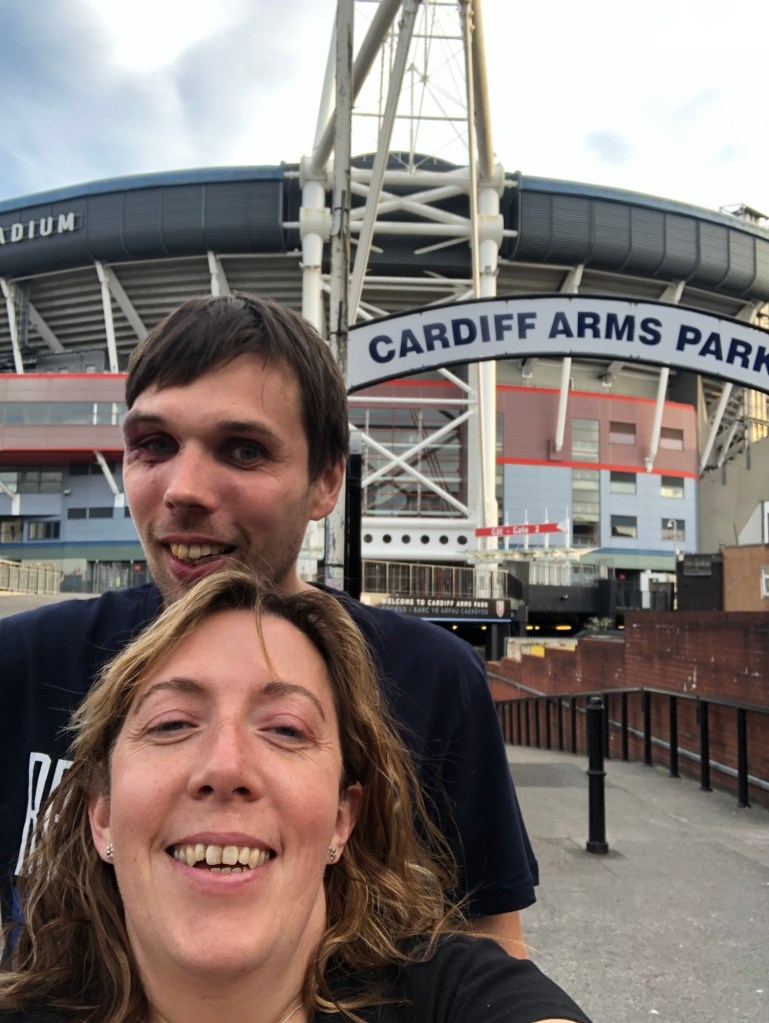
Funnily enough, despite my love of rugby, I’ve never actually been inside the Principality Stadium (which, in my head, will always be the Millennium Stadium). I have stood outside, though—when I took Ryan to Cardiff for his birthday two years ago. That trip was primarily for a Doctor Who tour (because I’m just as passionate about Doctor Who as I am about rugby), but standing outside that stadium, I felt the buzz of what it must be like on match day. One day, I’ll go inside and experience it properly.
A Special Memory: My Dad, His School, and the First Game at the Millennium Stadium
I will always remember the year the Millennium Stadium opened. My dad was a headteacher at the time of a bilingual Welsh and English school, and that Six Nations tournament in 1999 was a huge deal. There had been a campaign on S4C’s children’s TV for kids to design the first strip for the Welsh team to wear in the opening match. And, as fate would have it, one of the kids in my dad’s school won the competition.
As part of the prize, that child not only got to see their design brought to life, but they were also chosen as the team mascot for the match—Wales versus England, the perfect Six Nations clash. They had the strip, the honour, everything… except one problem. They didn’t know the Welsh national anthem.
That didn’t sit right with my dad. So, in the two weeks leading up to the match, he made sure that every single child in that school learned Hen Wlad Fy Nhadau. By the time that pupil stepped onto the pitch, they were ready—and so was every child in that school, singing proudly. My dad was in the stands that day, watching and singing his heart out. It was, I think, the proudest moment he ever had as a teacher.
A Rugby Shirt with a Special Message
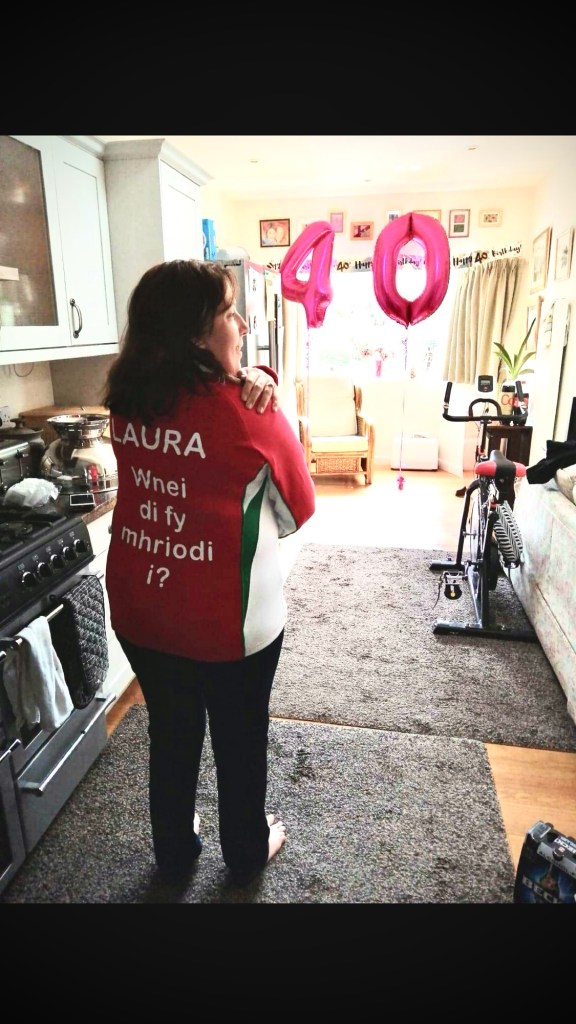
Of course, rugby shirts have a special meaning for me in more ways than one. Ryan actually proposed to me in the most very Welsh, very rugby way possible—by putting Will you marry me? in Welsh on a rugby shirt! It was such a perfect way to pop the question, but it does mean I have to be extra careful when grabbing a top to wear. The last thing I need is to walk around accidentally asking a random person called Laura to marry me!
Carrying Wales With Me
Even though I no longer live in Wales, my roots are unshakable. I carry Wales with me in my heart, in my values, in my love for the game, and in the way I raise my daughter. I want her to know where she comes from, to feel the same pride in our heritage, and to understand the magic of being Welsh.
Whenever rugby season comes around, I’ll be there, proudly wearing my red jersey, singing my heart out, and backing our boys all the way. Because no matter where I am, I will always be a Welsh girl through and through.
If you love Welsh rugby as much as I do, let’s connect! Drop a comment, share your favourite rugby memories, and let’s celebrate the incredible spirit of Wales together. Don’t forget to like and subscribe for more stories about life, parenting, and the things that make us who we are!
Are you patriotic? What does being patriotic mean to you?
 The bad and your parenting journey